White Label CCTV vs. Private Label: What's the Difference and Which Is Right for You?
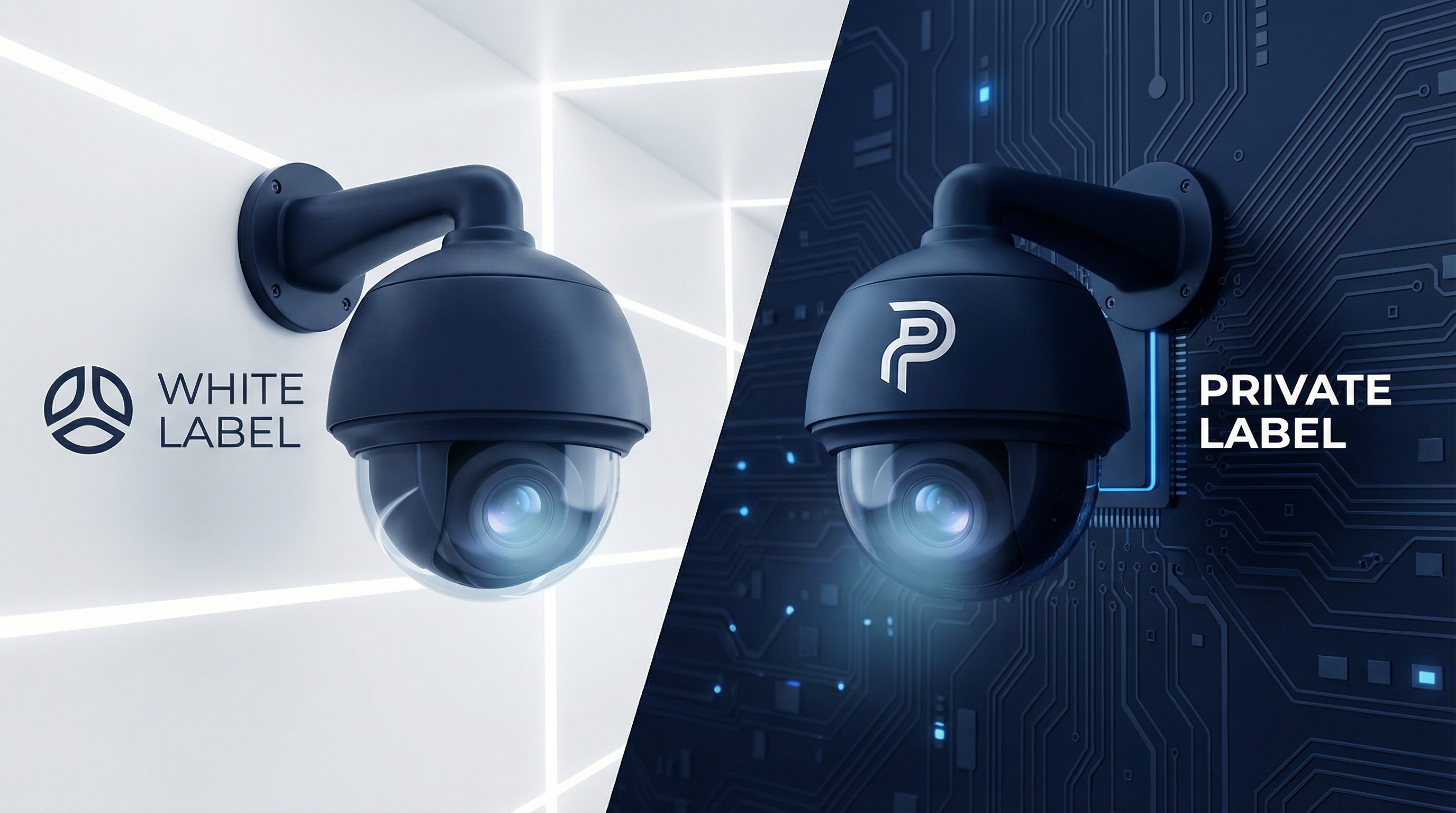
Understanding the difference between white label and private label CCTV is crucial for entrepreneurs, system integrators, and established brands looking to expand their product lines. This comprehensive guide breaks down the key distinctions to help you make an informed decision.
Introduction
In the rapidly growing security and surveillance industry, launching your own brand of CCTV cameras has never been more accessible. Two of the most popular business models for bringing a product to market without building a factory from the ground up are white label and private label. While often used interchangeably, they represent distinct approaches to product development, branding, and market strategy.
Understanding the difference is crucial for entrepreneurs, system integrators, and established brands looking to expand their product lines. Choosing the right model can significantly impact your time to market, investment level, and the long-term potential of your brand. This guide will break down the key distinctions between white label and private label CCTV, helping you make an informed decision for your business.
What is White Label CCTV?
A white label CCTV product is a generic, unbranded camera or surveillance system produced by a manufacturer who then sells it to multiple resellers. Each reseller can then apply their own brand, logo, and packaging to the product. Think of it as an off-the-shelf solution. The core product—the hardware and its core features—is identical for every company that sells it. The manufacturer has already handled the research, development, and tooling.
Key Characteristics of White Label: Generic Product – The manufacturer creates a single product sold to many different resellers. Minimal Customization – Customization is typically limited to branding, such as logos on the product and packaging. Low Barrier to Entry – Requires minimal upfront investment as R&D costs are absorbed by the manufacturer. Fast Time-to-Market – Since the product is already developed and tested, you can launch your brand very quickly.
White label is best for companies new to the market, businesses wanting to test a new product category with minimal risk, or those who need to launch a product line quickly.
What is Private Label CCTV?
Private label, in contrast, offers a higher degree of exclusivity and customization. In a private label arrangement, a manufacturer produces a product exclusively for one specific retailer or brand. The retailer has significant input into the product’s specifications, features, and design. This model allows a brand to create a unique product that is not available to its competitors. While the core technology might be based on the manufacturer’s existing platforms, the final product is tailored to the brand’s specific requirements.
Key Characteristics of Private Label: Exclusive Product – The product is manufactured exclusively for your brand. High Customization – You can specify features, design, components, and even the software/firmware. Higher Investment – Requires a larger upfront investment for tooling, development, and minimum order quantities (MOQs). Brand Differentiation – Allows you to create a unique product that stands out in the market.
Private label is best for established brands, companies with specific market needs, and businesses aiming to build a strong, differentiated brand identity.
White Label vs. Private Label: A Head-to-Head Comparison
Exclusivity: White label is non-exclusive and sold to multiple resellers, while private label is exclusive and sold only to your brand. Customization: White label offers low customization (branding and packaging only), while private label offers high customization (features, design, components). Investment: White label requires low investment, while private label requires high investment. Time-to-Market: White label is fast, while private label is slower. Differentiation: White label offers low differentiation, while private label offers high differentiation. Control: White label offers low control, while private label offers high control over the product.
The Role of OEM and ODM
It’s helpful to also understand the terms OEM (Original Equipment Manufacturer) and ODM (Original Design Manufacturer) as they relate to these models. An OEM manufactures a product based on the buyer’s design. This is closely related to private label, where the brand provides the specifications. An ODM designs and manufactures a product that can then be rebranded by other companies. This is the model that produces white label products.
Adiance Technologies excels in both OEM and ODM partnerships, offering a flexible spectrum of services to meet your specific needs, from off-the-shelf white label solutions to fully customized private label products.
Choosing the Right Manufacturing Partner
Regardless of whether you choose white label or private label, the quality of your manufacturing partner will determine the success of your product. Key factors to evaluate include: End-to-End Capabilities (does the manufacturer handle everything from PCB design to firmware development?), Complete Ecosystem (a modern surveillance product needs a mobile app, cloud VMS, and NVR support), Compliance and Certifications (NDAA, STQC, CE, FCC for target markets), Supply Chain Transparency (knowing the origin of components, especially the SoC), and Scalability (ability to scale production without compromising quality).
Conclusion: Which Model is Right for Your CCTV Brand?
Choosing between white label and private label depends entirely on your business goals, resources, and long-term strategy. Choose white label if you want to enter the market quickly, test a new product idea with low risk, or if your primary advantage is in marketing and sales, not product development. Choose private label if you have a clear vision for a unique product, want to build a strong and defensible brand, and have the resources to invest in creating a differentiated offering.
No matter which path you choose, partnering with an experienced and reliable manufacturer is the key to success. A good partner can provide not just the hardware, but a complete ecosystem including a white-label mobile app and cloud VMS to offer a seamless experience to your customers.