Supply Chain Diversification Guide for CCTV Brands: Building a Resilient Manufacturing Strategy
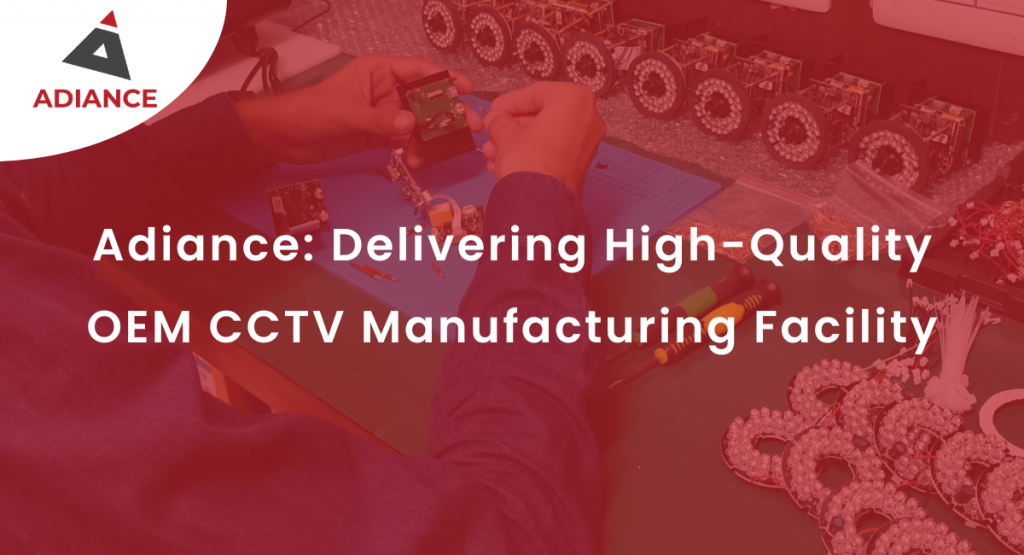
A practical, step-by-step guide for CCTV brands looking to diversify their manufacturing partnerships. Learn how to assess supply chain risks, evaluate alternative OEM/ODM partners, and build a resilient multi-source strategy that protects your business from trade restrictions, geopolitical disruptions, and supply chain interruptions.
Why Supply Chain Diversification Is No Longer Optional
The global CCTV and surveillance industry is at a crossroads. For years, brands relied on a handful of large-scale manufacturers concentrated in a single geographic region to produce their cameras, NVRs, and related hardware. This approach offered cost efficiency and simplicity. However, the past five years have exposed the fragility of this model. Trade restrictions, cybersecurity mandates like the NDAA, and global supply chain disruptions have forced brands to rethink their manufacturing strategy. Supply chain diversification is no longer a luxury or a theoretical exercise — it is a business imperative.
This guide provides a practical, step-by-step framework for CCTV brands looking to diversify their manufacturing partnerships. Whether you are a regional distributor, a system integrator with a private-label product line, or a global security brand, this guide will help you evaluate your current supply chain risks, identify alternative manufacturing partners, and build a resilient, multi-source supply chain that protects your business and your customers.
Understanding Your Current Supply Chain Risk
Before you can diversify, you need to understand where your vulnerabilities lie. A comprehensive supply chain risk assessment should evaluate three key dimensions: geographic concentration, regulatory compliance, and component dependency.
Geographic Concentration Risk
If more than 70% of your products come from a single country or region, you have a high geographic concentration risk. This means that any disruption in that region — whether from natural disasters, political instability, trade wars, or pandemics — could halt your entire product supply. The goal should be to have manufacturing capabilities in at least two distinct geographic regions.
Regulatory Compliance Risk
The regulatory landscape for surveillance equipment has become increasingly complex. The US NDAA Section 889 prohibits federal agencies from using equipment from certain restricted manufacturers. The European Union's Cyber Resilience Act imposes strict cybersecurity requirements on connected devices. Australia, the UK, and several other countries have implemented similar restrictions. If your current manufacturer is on any restricted list, or if their components include restricted SoCs (System-on-Chip), your products may be banned from key markets.
Component Dependency Risk
The System-on-Chip (SoC) is the brain of every IP camera. If your manufacturer relies on a single SoC vendor — particularly one that is subject to trade restrictions or export controls — your entire product line is at risk. A diversified manufacturing partner should be able to source SoCs from multiple, non-restricted vendors, ensuring that your products remain available and compliant regardless of geopolitical shifts.
How to Evaluate an Alternative OEM/ODM Manufacturing Partner
Selecting a new manufacturing partner is the most critical step in your diversification strategy. Here is a comprehensive evaluation framework that covers the key criteria you should assess.
Engineering and R&D Capabilities
A true OEM/ODM partner should have a dedicated, in-house R&D team capable of designing products from the ground up — not just assembling kits from third-party reference designs. Ask to see their engineering team, their lab facilities, and examples of custom products they have developed. A partner with strong R&D capabilities can help you differentiate your product line and respond quickly to market demands.
Quality Certifications and Standards
Look for internationally recognized certifications such as ISO 9001 for quality management, as well as local certifications relevant to your target markets. For the Indian market, STQC and BIS certifications are essential. For the European market, CE marking is required. These certifications demonstrate that the manufacturer has robust quality control processes and meets the regulatory requirements of your target markets.
Intellectual Property Protection
Your product designs, firmware, and brand identity are your most valuable assets. Ensure that your manufacturing partner operates in a jurisdiction with strong IP laws and has a proven track record of protecting their clients' intellectual property. Ask for references from existing OEM/ODM clients and review their standard NDA and IP protection agreements.
Scalability and Lead Times
Can the manufacturer scale production to meet your growth targets? What are their typical lead times for new orders and reorders? A partner with a modern, automated manufacturing facility and a well-managed supply chain should be able to offer competitive lead times and the flexibility to scale production up or down based on your demand.
Building a Multi-Source Manufacturing Strategy
The ideal diversification strategy does not mean replacing one single-source manufacturer with another. Instead, it means building a network of trusted partners across multiple regions. A common approach is the 70-20-10 model: 70% of your volume from your primary partner, 20% from a secondary partner in a different region, and 10% reserved for testing new partners or handling overflow demand.
This model provides resilience without sacrificing the cost efficiency and relationship depth that comes from a strong primary partnership. It also gives you leverage in negotiations and ensures that you always have a backup if your primary partner faces disruptions.
The Role of India in Global CCTV Manufacturing
India has emerged as one of the most attractive destinations for CCTV manufacturing diversification. With a large pool of engineering talent, competitive labor costs, strong IP protection laws, and a government that actively supports electronics manufacturing through initiatives like Make in India and the Production Linked Incentive (PLI) scheme, India offers a compelling value proposition for global brands.
Indian manufacturers like Adiance have invested heavily in state-of-the-art manufacturing facilities, advanced R&D capabilities, and international certifications. They offer the full spectrum of OEM, ODM, and JDM partnership models, with the flexibility to customize products to meet the specific requirements of different markets and customers.
Frequently Asked Questions
What is supply chain diversification in the CCTV industry?
Supply chain diversification in the CCTV industry refers to the strategic practice of sourcing surveillance hardware — cameras, NVRs, and related equipment — from multiple manufacturing partners across different geographic regions. This reduces dependency on a single source and mitigates risks from trade restrictions, geopolitical disruptions, and supply chain interruptions.
Why is NDAA compliance important for CCTV manufacturers?
NDAA Section 889 prohibits US federal agencies from procuring or using video surveillance equipment from certain restricted manufacturers. Compliance is critical because it determines whether your products can be sold to the US government and, increasingly, to private enterprises that do business with the government. Non-compliance can result in loss of access to the world's largest security market.
How do I verify if a manufacturer is truly NDAA compliant?
To verify NDAA compliance, you should confirm that the manufacturer does not appear on the restricted entity list, that their SoC (System-on-Chip) and critical components are sourced from non-restricted vendors, and that they can provide documentation and certifications attesting to their compliance. Ask for a detailed Bill of Materials (BOM) and verify the origin of all key components.
What are the benefits of OEM vs ODM partnerships?
In an OEM (Original Equipment Manufacturer) partnership, the manufacturer produces products based on your exact specifications and designs. In an ODM (Original Design Manufacturer) partnership, the manufacturer designs the product and you rebrand it under your own label. OEM offers more customization and differentiation, while ODM is faster to market and requires less upfront investment. Many brands use a combination of both models.
How long does it take to onboard a new OEM/ODM manufacturing partner?
The typical onboarding timeline for a new OEM/ODM partner is 3 to 6 months, depending on the complexity of your product requirements and the level of customization needed. This includes initial evaluation, NDA signing, product specification, prototype development, testing, and first production run. Working with an experienced partner like Adiance can significantly reduce this timeline.
Take the First Step Toward a Resilient Supply Chain
Diversifying your CCTV manufacturing supply chain is one of the most impactful strategic decisions you can make for your business. Adiance Technologies is a trusted OEM/ODM partner with over 20 years of engineering expertise, STQC and BIS certifications, and a state-of-the-art manufacturing facility in India. Contact our partnership team at contact@adiance.com to discuss how we can help you build a resilient, compliant, and competitive product line.