Why Enterprises Need Secure and Compliant Video Management Systems
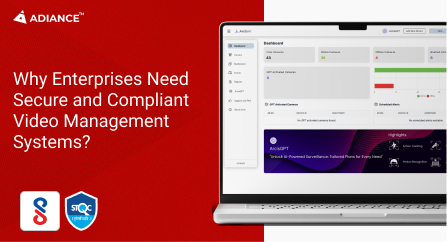
Enterprise surveillance has evolved far beyond simply recording video footage. Today, surveillance systems support security operations, incident investigations, operational oversight, risk management, compliance initiatives, and business continuity planning. As organizations expand across multiple locations, surveillance infrastructure becomes increasingly complex, making it difficult to maintain visibility, consistency, and control. What may work for a single office or facility often becomes inefficient when organizations begin managing warehouses, manufacturing plants, retail outlets, campuses, regional offices, or critical infrastructure sites spread across different locations. This growing complexity is changing how enterprises approach surveillance management.
The Growing Complexity of Enterprise Surveillance
Large enterprises face challenges that go far beyond installing cameras and storing recordings.
A manufacturing company may need visibility across production floors, inventory areas, loading bays, and facility perimeters. A logistics provider may need centralized oversight of multiple warehouses, while a retail chain may require monitoring across dozens of stores.
As surveillance deployments grow, organizations commonly struggle with:
- Managing hundreds or thousands of cameras
- Monitoring multiple facilities simultaneously
- Coordinating security teams across locations
- Managing user access and permissions
- Retrieving video footage efficiently
- Maintaining consistent security procedures
These challenges are difficult to address through standalone surveillance systems operating independently at each site.
Why Centralized Surveillance Management Has Become Essential
One of the biggest challenges facing enterprises today is fragmentation.
When each facility operates through separate surveillance systems, investigations become slower, monitoring becomes inconsistent, and administrative workloads increase. Security teams often spend valuable time accessing different systems and collecting information from multiple locations before they can respond effectively.
This is why centralized surveillance management has become a key requirement for modern enterprises.
A centralized approach enables organizations to:
- Monitor multiple facilities through a single platform
- Improve incident response and investigations
- Standardize security procedures across locations
- Reduce operational complexity
For enterprises operating at scale, centralized management provides greater visibility while improving overall security oversight. It also allows organizations to manage users, devices, recordings, and security policies from a unified interface, making surveillance operations more efficient and easier to scale as business needs grow.
The Need for Greater Accountability and Security
Enterprise surveillance systems are often accessed by multiple stakeholders, including security personnel, facility managers, operations teams, compliance officers, and IT administrators.
However, not every user should have access to every camera, recording, or system setting.
Organizations increasingly require surveillance platforms that support role-based access control, user authentication, audit trails, and structured permission management. These capabilities help ensure that users only access information relevant to their responsibilities while improving accountability across the organization.
At the same time, surveillance systems are becoming more connected through remote access, mobile applications, and network-based infrastructure. As a result, software security has become just as important as physical security.
Enterprises need surveillance platforms capable of protecting operational data, maintaining system integrity, and supporting secure access across distributed environments. Features such as encrypted communication, secure user authentication, and detailed activity logs help strengthen cybersecurity while ensuring transparency and traceability across surveillance operations.
Why Compliance Is Becoming a Key Selection Factor
Compliance is becoming an increasingly important consideration in enterprise surveillance deployments.
Organizations across industries are placing greater emphasis on governance, operational transparency, technology reliability, and risk management. As a result, surveillance procurement decisions are increasingly influenced by quality standards, certifications, and vendor credibility.
Enterprises are looking for surveillance solutions that demonstrate:
- Secure development practices
- Quality assurance processes
- Reliable performance
- Long-term vendor accountability
This shift reflects a broader industry trend toward trusted and compliant surveillance technologies.
The Evolution Toward Video Management Systems
As enterprise surveillance environments become larger and more complex, organizations need a centralized platform capable of bringing together cameras, recordings, users, monitoring operations, investigations, and system administration.
This requirement has led to the widespread adoption of Video Management Systems (VMS).
A Video Management System acts as the operational backbone of modern surveillance infrastructure. Rather than managing individual cameras separately, enterprises can oversee their entire surveillance environment through a unified platform.
A modern VMS helps organizations centralize monitoring, manage recordings, control user access, streamline investigations, and maintain visibility across multiple facilities. It also provides the scalability required to support future growth without significantly increasing management complexity.
For many organizations, a VMS transforms surveillance from a collection of devices into a structured and manageable enterprise security ecosystem.
What Enterprises Should Look for in a Video Management System
Choosing the right VMS requires evaluating more than software features alone.
Organizations should assess whether the platform can support long-term operational, security, and compliance objectives while remaining capable of scaling alongside the business.
Key considerations include:
- Centralized monitoring and management
- Strong security and access controls
- Multi-site surveillance support
- Scalability for future expansion
- Compliance readiness
- Reliable performance and stability
- Ongoing technical support and updates
The most effective VMS platforms help enterprises simplify surveillance operations while maintaining security, visibility, and operational consistency.
Why Certification and Trust Matter
Enterprise surveillance systems are expected to operate continuously while supporting critical business and security functions.
As a result, organizations increasingly evaluate not only product capabilities but also the credibility of the technology providers behind them.
Trusted certifications, proven development processes, product testing standards, and long-term support capabilities provide additional confidence that a surveillance platform can meet enterprise requirements reliably and securely.
For organizations operating across manufacturing, logistics, banking, education, transportation, and critical infrastructure sectors, this level of assurance is becoming increasingly important.
How Adiance Supports Secure and Compliant Enterprise Surveillance
As enterprises seek surveillance solutions that combine security, scalability, and compliance, the importance of trusted hardware and software continues to grow.
Adiance Technologies supports these requirements through an integrated surveillance ecosystem designed for enterprise deployments. The company's portfolio includes BIS-ER Certified CCTV Cameras, an STQC-Certified Video Management System, in-house manufacturing expertise, and centralized surveillance solutions built for multi-site operations.
By combining certified hardware and certified software within a unified framework, Adiance helps organizations improve operational visibility, strengthen security governance, and support long-term compliance objectives.
Conclusion
Enterprise surveillance environments are becoming more connected, complex, and business-critical than ever before.
Organizations need more than cameras alone. They require centralized management, stronger access controls, improved accountability, compliance readiness, and the ability to scale surveillance operations efficiently as business requirements evolve.
This is why secure and compliant Video Management Systems have become a critical component of modern enterprise surveillance strategies.
As surveillance infrastructure continues to grow, the software managing that infrastructure will play an increasingly important role in determining the effectiveness, security, and long-term value of enterprise surveillance investments.
Frequently Asked Questions
What is a Video Management System (VMS)?
A Video Management System is software used to manage surveillance cameras, recordings, monitoring operations, users, and investigations through a centralized platform.
Why do enterprises need centralized surveillance management?
Centralized management improves visibility, simplifies operations, accelerates investigations, and helps maintain consistency across multiple locations.
Why is security important in enterprise surveillance software?
Secure surveillance software helps protect operational data, manage user access, maintain system integrity, and support reliable surveillance operations.
What should organizations consider when selecting a VMS?
Organizations should evaluate security, scalability, centralized management capabilities, compliance readiness, reliability, and long-term support.
Why are certified surveillance platforms becoming more important?
Certified platforms provide greater confidence in quality, security, reliability, and long-term operational performance.