Latest Technologies Transforming CCTV Camera Manufacturing in 2026
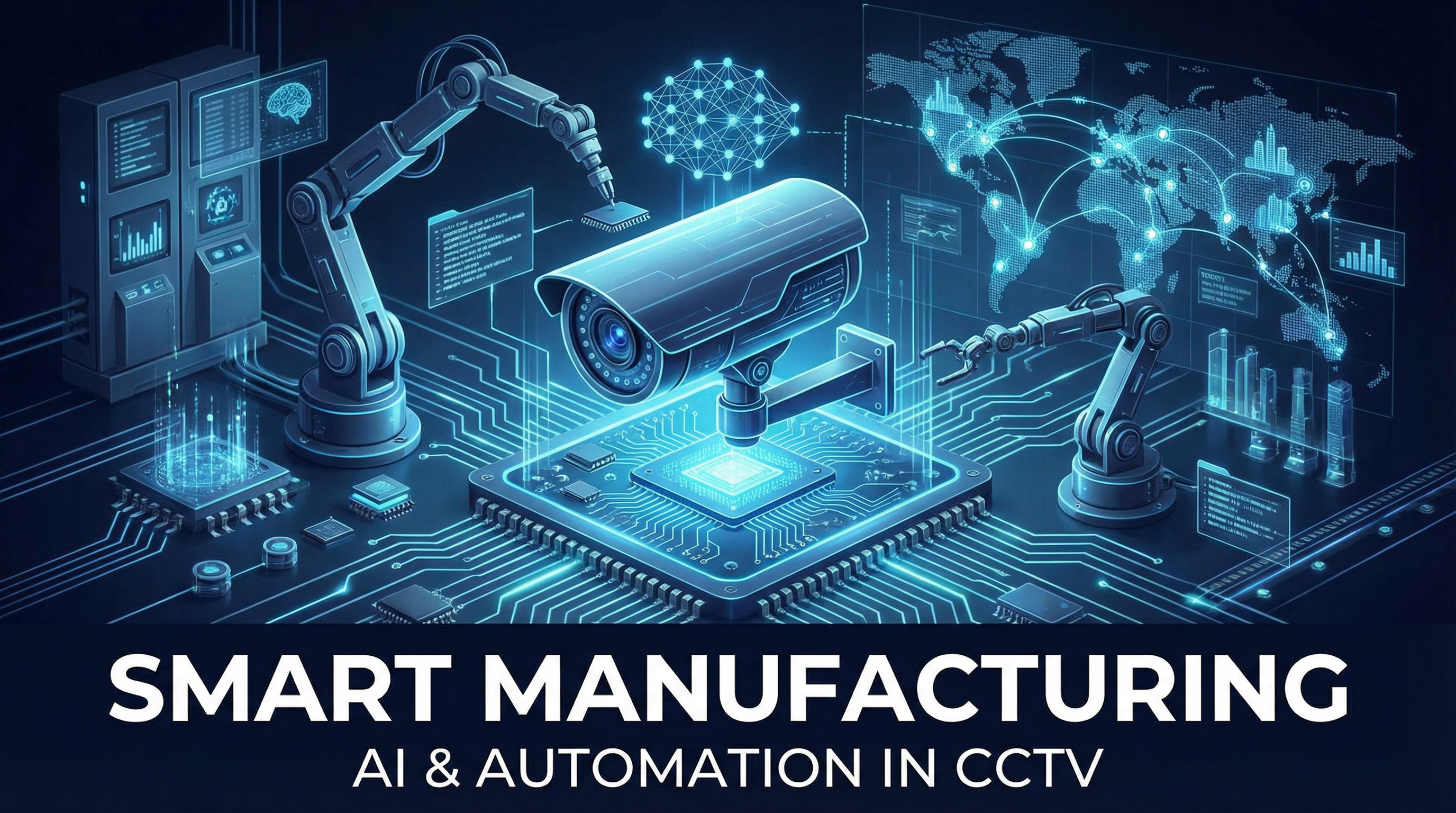
CCTV technology is evolving faster than ever as security demands increase across industries. Today, a CCTV camera is no longer just a recording device. It has become an intelligent system that analyzes, detects, and responds in real time. As far as modern security needs are concerned, accuracy, automation, and scalability now matter more than basic surveillance. Manufacturers are rethinking how security camera systems are designed, built, and deployed. AI-powered analytics, smarter hardware, and cloud-based intelligence are shaping the future of CCTV camera manufacturing. This shift is also setting new benchmarks for performance, reliability, and compliance.
What Is CCTV Technology?
Closed-Circuit Television (CCTV) technology refers to systems that capture, transmit, and manage video feeds for security and monitoring. Earlier CCTV systems relied on analog cameras and manual observation. However, modern CCTV technology integrates digital imaging, networking, and software intelligence.
A CCTV camera today includes image sensors, processors, firmware, and analytics engines. These components work together to deliver high-quality video and actionable insights. As well as improving visibility, modern systems reduce human dependency through automation.
Manufacturing has also changed. Camera hardware is now designed to support AI models, edge processing, and remote upgrades. This evolution ensures long-term scalability and future readiness.
Why Modern CCTV Technology Matters More Than Ever
Modern CCTV technology addresses challenges that traditional surveillance systems could not handle. Rising urban density, public safety concerns, and operational efficiency demands require smarter solutions.
Security camera systems now help prevent incidents instead of only recording them. AI-driven alerts enable faster decision-making. So organizations gain proactive control over their environments.
Compliance and data security also play a major role. Manufacturers must meet strict quality and cybersecurity standards. As far as system reliability goes, modern architectures offer better uptime and remote management.
Because of these factors, businesses increasingly prefer advanced CCTV technologies over legacy setups.
Game-Changing Technologies Revolutionizing CCTV in 2026
AI CCTV Camera Intelligence at the Edge
AI CCTV camera systems now process video directly inside the camera. Edge intelligence eliminates delays caused by server dependency. This ensures instant decision-making in time-sensitive environments.
Real-Time Video Analytics
Edge-based analytics trigger alerts the moment an event occurs. Security teams act immediately without reviewing footage manually. So response time improves across high-risk locations.
Embedded AI Chipsets
Manufacturers integrate AI processors into CCTV camera hardware. This changes board design, thermal planning, and power efficiency. Cameras are now built for intelligence, not just imaging.
Privacy-Driven Processing
Local AI processing limits unnecessary video transmission. Sensitive data stays within the device. This design supports privacy regulations and industry compliance requirements.
Cloud-Driven CCTV Technologies
Cloud platforms enable centralized monitoring of distributed CCTV systems. Operators manage updates, access, and configurations remotely. This supports enterprise-scale deployments efficiently.
Hybrid Edge-Cloud Architecture
Modern CCTV technologies combine edge intelligence with cloud analytics. Cameras process events locally while the cloud handles insights. This balance ensures adaptability as requirements evolve.
Advanced Imaging Sensors
New sensor technologies improve clarity in low-light and complex scenes. Enhanced imaging ensures usable footage for investigations. Evidence reliability becomes stronger in critical scenarios.
High-Resolution
Manufacturers adopt higher-resolution sensors with optimized processing pipelines. Cameras deliver detailed footage without affecting stability. This defines current CCTV camera innovations.
Hardware Trends
Sensor efficiency, AI integration, and modular design shape CCTV in 2026. These hardware trends support scalability and long-term system relevance.
Partner with Adiance Technologies for Next-Generation Security CCTV Solutions
Adiance Technologies is an Indian OEM and ODM CCTV camera manufacturer focused on building future-ready security systems. Our manufacturing expertise supports intelligent CCTV camera designs that meet evolving surveillance, compliance, and scalability requirements.
We develop CCTV camera solutions with embedded AI readiness, advanced imaging hardware, and support for Edge AI and Cloud AI architectures. Each system is engineered to enable intelligent video analytics, remote manageability, and long-term technology upgrades.
Our manufacturing process emphasizes reliability, performance consistency, and cybersecurity alignment. From PCB assembly to final camera integration, we ensure strict quality control and industry-grade standards.
By combining innovation-led manufacturing with deep video surveillance expertise, Adiance Technologies enables organizations and brands to deploy modern CCTV technology that remains relevant in dynamic security environments.
Final Thoughts
CCTV camera manufacturing is shifting from hardware-centric design to intelligence-driven systems. AI-powered analytics, edge processing, and cloud integration are redefining how surveillance solutions are built and deployed.
CCTV technology trends clearly point toward cameras acting as proactive security assets. Modern systems deliver real-time insights, operational efficiency, and scalable control across environments.
As CCTV camera innovations continue to accelerate, selecting a capable manufacturing partner becomes critical. The right partner ensures reliability, future readiness, and long-term value in an evolving security landscape.
Related Articles & Resources
FAQs on CCTV Technology
What is the future of CCTV technology?
The future of CCTV technology lies in intelligent, automated surveillance systems. AI-driven analytics, edge processing, and cloud integration will enable cameras to detect events, generate insights, and support proactive security rather than passive recording.
How do AI CCTV cameras improve security?
AI CCTV cameras improve security by automatically analyzing video feeds for people, objects, and abnormal behavior. This reduces dependence on manual monitoring and enables faster, more accurate incident detection and response.
Why is modern CCTV technology important for businesses?
Modern CCTV technology helps businesses improve safety, meet compliance requirements, and gain operational visibility. Intelligent surveillance systems support risk prevention, asset protection, and scalable security management across locations.
What role does manufacturing play in CCTV camera innovation?
Manufacturing plays a critical role in CCTV camera innovation by determining hardware performance, AI capability, and system reliability. Design quality, chipset integration, and build standards directly impact image clarity, cybersecurity, and long-term scalability.