What Global CCTV Brands Look for in an Indian OEM CCTV Manufacturer
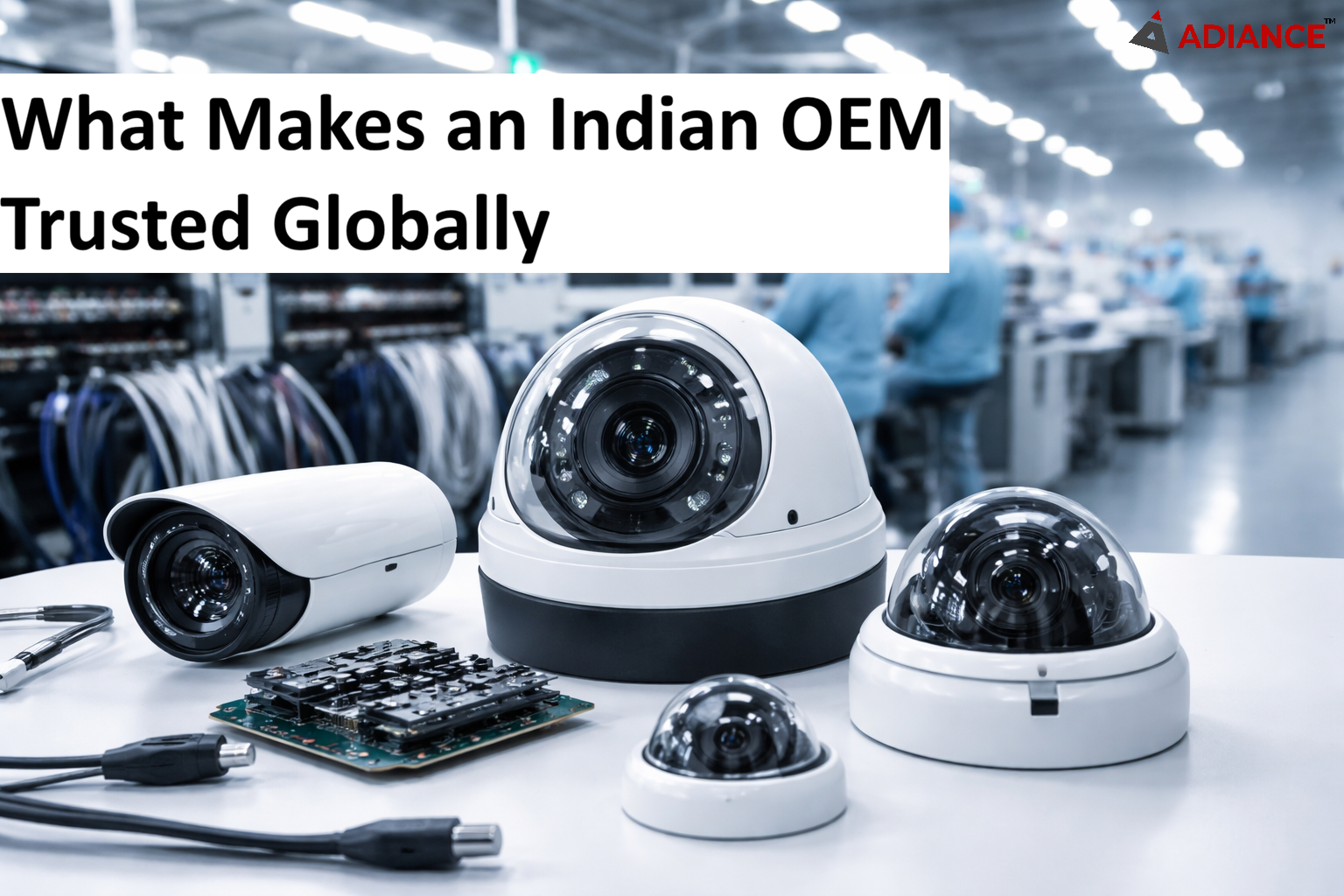
Global CCTV brands are increasingly partnering with an Indian OEM CCTV manufacturer to diversify supply chains, improve quality control, and reduce dependency risks. As sourcing strategies evolve, India has emerged as a reliable manufacturing destination for surveillance hardware. However, global brands do not select OEM partners casually. They evaluate Indian manufacturers across infrastructure, quality, compliance, engineering depth, and long-term reliability. Understanding these expectations is critical for any brand planning to outsource CCTV manufacturing to India. This article explains what global CCTV brands truly look for when evaluating an Indian OEM partner.
Manufacturing Infrastructure & Production Capability
In-house Manufacturing Setup
Global brands prefer OEMs with strong in-house facilities. This reduces third-party dependency and improves quality control. A reliable CCTV OEM manufacturing in India setup includes SMT, PCB assembly, camera assembly, testing, and packaging under one roof.
Tooling, Fixtures & Production Readiness
Dedicated tooling and fixtures ensure assembly accuracy. They also improve repeatability at scale. In-house tooling support allows faster customization. It reduces reliance on external vendors.
Production Capacity & Scalability
Brands assess whether OEMs can scale smoothly. Support for pilot and mass production is essential. Capacity planning reflects long-term readiness. It ensures volume growth without quality loss.
Automation & Process Efficiency
Automation improves placement accuracy and testing reliability. It also reduces manual errors. Efficient processes shorten production cycles. This helps brands achieve faster time-to-market.
Process Standardization & Documentation
Standard operating procedures reduce ambiguity. They ensure consistent output across batches. Documented workflows support audits and expansion. Global brands value predictable processes.
Facility Layout & Production Flow
Optimized layouts reduce handling errors. They improve operational efficiency. Clear production flow supports quality checks. It also strengthens compliance readiness.
Quality Control & Testing Standards
Component-Level Quality Checks
Global buyers expect strict incoming inspections. Each component must meet defined specifications before use. Early rejection prevents assembly defects. It also reduces long-term failure rates.
Approved Vendor & Component Validation
OEMs must work with approved component vendors. This ensures consistency and supply reliability. Pre-qualified components reduce performance variation. Global brands value controlled sourcing.
In-Process Quality Monitoring
Quality checks during assembly detect issues early. This prevents defect accumulation. Real-time monitoring improves yield. It also reduces rework and wastage.
Functional & Environmental Testing
CCTV manufacturing compliance includes functional, temperature, and endurance testing. These tests confirm stable performance. They validate reliability under real-world conditions.
Burn-In & Stress Testing
Burn-in testing exposes early component failures. It improves long-term product stability. Stress testing validates continuous operation. Global brands expect this rigor.
Traceability & Batch Control
Traceability links components to production batches. This supports audits and recalls. Batch control improves issue resolution. It strengthens buyer confidence.
Final Quality Audit Before Dispatch
Final audits verify functionality and appearance. Only approved units are packed. This step ensures shipment consistency. Global buyers expect zero-compromise delivery.
Engineering & Customization Expertise
Hardware Customization Capability
Global brands rarely accept generic designs. An electronics OEM manufacturer India must support custom PCBs, enclosures, and component choices. Customization enables differentiation. It also aligns products with brand-specific requirements.
Firmware & Integration Support
OEMs must collaborate closely with client firmware teams. Smooth hardware–software alignment reduces integration delays. Better compatibility improves system stability. It also shortens validation cycles.
Design for Manufacturability
Engineering teams must optimize designs for mass production. Design for manufacturability reduces cost and improves yield. It also minimizes assembly complexity. This supports faster production scaling.
Prototyping & Validation Support
Rapid prototyping helps validate designs early. It reduces development risk. Early testing shortens time-to-market. Global brands value quick iterations.
Component Optimization & Cost Engineering
OEM engineers suggest alternative components. This balances performance and cost. Cost engineering improves margins. It also supports long-term supply stability.
Cross-Functional Engineering Collaboration
Hardware, quality, and production teams must work together. This avoids design-to-production gaps. Cross-functional alignment improves execution. It also reduces late-stage changes.
Engineering Change Management
Controlled change processes are essential. All revisions must be documented and approved. Change management ensures consistency. Global brands expect disciplined execution.
Compliance, Certifications & Export Readiness
Mandatory Certifications
Global CCTV brands expect compliance with BIS, CE, FCC, and RoHS. An experienced OEM CCTV supplier India plans certification early. Early compliance prevents launch delays. It also reduces redesign risk.
Documentation & Audit Readiness
Clear documentation supports third-party audits. Test reports must stay updated. Audit-ready records build trust. Global brands value transparency.
Market-Specific Regulatory Support
Different regions follow different norms. OEMs must adapt products without major redesigns. Regulatory flexibility speeds global expansion. It reduces approval cycles.
Pre-Compliance Testing Support
Pre-compliance testing identifies gaps early. It avoids certification failures. Early testing saves cost. It also shortens approval timelines.
Export Packaging & Labeling Compliance
Export markets require compliant labeling. Packaging must meet regional standards. Correct labeling prevents customs issues. It ensures smooth cross-border movement.
Traceable Compliance Records
All certifications must link to production batches. This supports recalls and audits. Traceability improves accountability. Global brands expect this discipline.
Regulatory Update Awareness
Compliance requirements evolve over time. OEMs must track regulatory changes. Proactive updates prevent non-compliance. They protect brand reputation.
Supply Chain Reliability & Component Sourcing
Multi-Vendor Sourcing Strategy
Brands prefer a CCTV camera manufacturing partner with diversified sourcing. This reduces dependency on single suppliers. Multi-vendor sourcing minimizes disruption risks. It improves supply continuity.
Strategic Supplier Partnerships
OEMs must build long-term supplier relationships. Trusted suppliers ensure consistent quality. Strong partnerships stabilize pricing. They also improve component availability.
Component Lifecycle Management
Managing end-of-life components is critical. OEMs should suggest alternatives early. Proactive planning ensures product continuity. It avoids sudden redesigns.
Inventory & Buffer Stock Planning
Buffer stock protects production schedules. It reduces the impact of supply delays. Smart inventory planning improves reliability. Global brands value preparedness.
Cost & Availability Optimization
OEMs must balance cost with availability. Alternative sourcing supports competitive pricing. Optimized sourcing improves margins. It also strengthens supply resilience.
Transparent Lead Time Management
Clear communication around procurement timelines builds trust. Buyers prefer realistic timelines. Predictable lead times support planning. They reduce operational uncertainty.
Risk Assessment & Contingency Planning
OEMs must assess supply risks regularly. Contingency plans prevent production stoppages. Risk management ensures stability. Global brands expect this capability.
Scalability, Communication & Long-Term Partnership
Volume Scaling Support
An Indian OEM CCTV manufacturer must scale from pilot batches to mass deployment. Smooth scaling reflects operational maturity. Scalable infrastructure supports rapid growth. Global brands expect this capability.
Flexible Production Planning
OEMs must adjust production based on demand changes. Flexibility prevents bottlenecks. Adaptive planning improves responsiveness. It supports long-term collaboration.
Dedicated Account Management
Global brands value responsive communication. Dedicated account managers simplify coordination. Clear communication speeds decisions. It reduces operational friction.
Transparent Reporting & KPIs
OEMs should share production and quality metrics. KPIs improve visibility and accountability. Data-driven reporting builds trust. Global buyers value measurable performance.
IP Protection & Confidentiality
Protecting intellectual property is essential. Strong NDAs and security policies are mandatory. Robust data protection strengthens partnerships. It safeguards brand innovation.
Long-Term Collaboration Framework
OEMs must align with client growth plans. Strategic alignment supports mutual expansion. Long-term frameworks ensure stability. Global brands prefer committed partners.
Continuous Improvement Culture
OEMs should focus on ongoing process improvement. Regular reviews enhance performance. Continuous improvement ensures competitiveness. It supports sustainable partnerships.
Adiance Technologies as an Indian OEM CCTV Manufacturing Partner
Adiance Technologies demonstrates how an Indian OEM CCTV manufacturer can meet global brand expectations across manufacturing, engineering, quality, and scalability.
End-to-End Manufacturing Capability
Adiance operates integrated facilities covering SMT, PCB assembly, camera assembly, testing, and packaging. This ensures consistent quality and faster production cycles.
Engineering & Customization Expertise
Adiance supports hardware customization, PCB design optimization, and firmware integration. This helps global brands build differentiated CCTV products.
Quality, Compliance & Export Readiness
Adiance follows structured quality control and global compliance standards, including BIS, CE, FCC, and RoHS. Export-ready processes simplify international deployment.
Scalable OEM Partnership Model
Adiance supports scalable production and long-term OEM collaboration. Secure IP practices strengthen trust with global CCTV brands.
Related Articles & Resources
FAQs
Why are global CCTV brands choosing Indian OEM manufacturers?
Global brands choose Indian OEMs for manufacturing stability, cost efficiency, and skilled engineering support. India also supports long-term scalability and export readiness.
What certifications do global brands expect from Indian CCTV OEMs?
Brands typically expect BIS, CE, FCC, and RoHS compliance. Documentation and audit readiness are equally important for global markets.
How do Indian OEMs support large-scale CCTV manufacturing?
Indian OEMs support scale through automated assembly, capacity planning, and standardized processes. This enables consistent high-volume production.
What makes an Indian OEM suitable for long-term partnerships?
Strong communication, IP protection, quality consistency, and engineering collaboration make Indian OEMs reliable long-term partners.