Emerging Applications of Drone Surveillance Technology
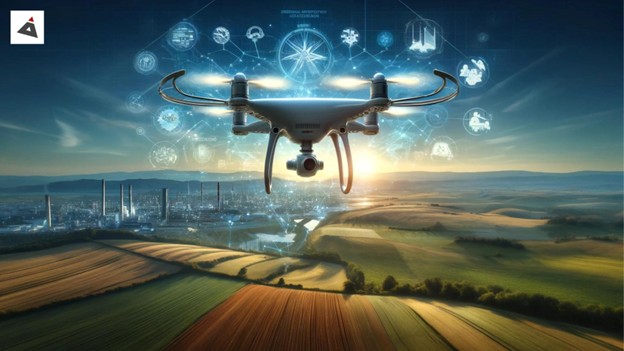
Drones, also known as uncrewed aerial vehicles (UAVs), are becoming increasingly common in various industries. Although they are still relatively new and have yet to be widely used, they have already started changing how things work in traditionally resistant sectors to technological advancements.
How Drones Are Used
In recent years, drones have become essential tools for many businesses and government organisations. They are being used in a wide range of activities, such as:
Enabling quick deliveries in busy areas with heavy traffic
Conducting surveillance and gathering information in remote or inaccessible military sites
Monitoring and inspecting infrastructure like pipelines, power lines, and bridges
Assisting in search and rescue operations during natural disasters
Supporting agricultural practices through crop monitoring and spraying
Benefits of Drone Integration
Operational Efficiency
Drones can perform tasks faster and more efficiently than humans in certain situations like large-scale infrastructure inspections or expansive agricultural fields; drones excel in swiftly covering vast areas and gathering data, enhancing operational efficiency and leading to streamlined operations.
Cost Reduction
By automating processes that would otherwise require manual labour or expensive equipment, drones can help reduce expenses.
Accuracy Improvement
With advanced sensors and imaging capabilities, drones can provide highly accurate data for analysis and decision-making.
Enhanced Customer Service
Drones make prompt deliveries and improved response times possible, resulting in better customer satisfaction.
Scalable Security Solutions
Drones offer flexible options for addressing security issues at various locations, making them suitable for global applications.
The Growing Significance of Drones
The fact that drones are quickly moving from being seen as novelties to being widely adopted reflects how their potential and versatility are being acknowledged on a global scale.
Drones are transforming different industries through their ability to reach remote areas with minimal human involvement and resource usage. This shift highlights the increasing importance of automation and efficiency in today's world.
Exploring Drone Technology's Impact on Manufacturing: Key Applications Unveiled
Revolutionizing Warehouse Efficiency
AI-Powered Drone Inventory Management Drones are significant in manufacturing, mainly inventory and production line management. They automate various tasks in warehouses and production lines, such as:
Capturing shelf content for real-time inventory monitoring
Aiding in packaging through object detection
Their speed enables more frequent cycle counts, ensuring updated inventory accuracy.
NOTE: Drones' autonomy, supported by AI, eliminates the need for manual control, making them accessible even to inexperienced users. Consequently, this reduces reliance on additional Material Handling Equipment (MHE) and frees up resources for essential operations.
Enhancing Manufacturing Efficiency
AI-Powered Quality Control and Safety Monitoring with Drones
Quality control
Drones are instrumental in quality control processes as they conduct thorough visual inspections, ensuring meticulous examination of manufacturing components.
Safety enhancement
Drones contribute to safety enhancement by swiftly identifying potential hazards and ensuring compliance with safety regulations.
Asset monitoring
Drones monitor assets, enabling proactive maintenance interventions and preventing potential equipment failures.
Compliance inspections
Drones’ efficiency in conducting compliance inspections ensures adherence to industry standards and regulations, promoting operational excellence and minimising risks.
REMEMBER
They play a crucial role in inspecting critical infrastructure and detecting malfunctions and early signs of leaks to mitigate risks to employees and operations. Drones also alleviate workers from hazardous tasks like retrieving items from high shelves and responding to spills.
Enhancing Manufacturing Efficiency
AI-Enabled Drones for Surveillance and Maintenance
Advanced drones are employed in smart manufacturing to monitor vast industrial spaces efficiently, capturing high-resolution images and videos for instant analysis. This proactive approach aids in rapidly identifying potential issues, such as equipment failures or safety hazards, promoting accident prevention and a secure work environment.
IMPORTANT: These drones excel in accessing inaccessible or perilous zones, such as tall structures or confined spaces, mitigating safety risks associated with manual inspections. Their real-time inspection capabilities streamline operations without compromising safety or productivity.
Moreover, drones facilitate remote inspection through live video streaming, enabling experts to assess data and provide timely maintenance guidance. This eliminates the need for physical presence in hazardous areas and harnesses global expertise for swift and effective issue resolution.
AI-Enhanced Drone Surveillance for Timely Environmental Alerts
Drones facilitate non-intrusive data collection in sensitive or hazardous settings, reducing potential harm to ecosystems, wildlife, and human safety. They enable the exploration of rugged terrains and disaster zones with minimal risk.
REMEMBER: Automated guided vehicles offer a secure means to investigate accidents and disaster sites without jeopardising personnel safety. Drones ensure data acquisition without human intervention in precarious environments, diminishing the likelihood of human injuries. They enhance site examination more efficiently and securely.
In healthcare, computer vision systems hold promise. Neural network AI and machine learning capabilities can aid in object detection for analysing medical images, assisting in cancer detection and other diagnostic tasks alongside human doctors. This technology accelerates diagnosis and initiates prompt treatment.
Revolutionizing Delivery Logistics
Integrating Drones for Optimal Route Planning
Drones offer a new way to improve traditional delivery systems. They have the potential to:
- Reduce traffic congestion
- Speed up deliveries
- Minimize environmental impact by using electricity instead of fossil fuels
However, there are still some areas that need improvement, such as:
- Making sure drones can accurately detect their path
- Developing better systems to avoid collisions
Despite these challenges, it's important to continue exploring the benefits and possibilities of drone technology. In addition to delivery logistics, drones can also be helpful within facilities for transporting tools and items, which can help reduce manual labour.
Drone technology is changing the way supply chains are managed. It offers advantages such as:
- Increased efficiency
- Improved safety
- Faster operations
Here are some specific areas where drones are making a difference in supply chain management:
Inventory Management
Drones are transforming how inventory is handled in warehouses. For example, studies conducted by DSV using autonomous inventory drones have shown significant time savings:
- Up to 50% reduction in data collection time
- Potential efficiency gains of up to 80% when fully implemented
This increase in productivity is possible because drones can quickly and accurately scan inventory, even in large warehouses.
Surveillance
Drones are also being used for surveillance purposes in supply chain management. They can:
- Monitor warehouse activities
- Identify potential security threats
- Conduct inspections of hard-to-reach areas
Delivery
Another area where drones are proving beneficial is in the delivery process. They can:
- Expedite last-mile deliveries
- Reach remote locations more easily
- Reduce costs associated with traditional delivery methods
While there are still challenges to overcome, such as regulations, security concerns, and technical limitations, integrating drones into supply chain management is an ongoing development. They are handy for extensive facilities or those seeking to minimise manual labour reliance.
Optimizing Supply Chains with Drone Technology
Utilising AI-enabled Drones for Streamlined Health and Safety Inspections
One application of using uncrewed aerial vehicles (UAVs) for business purposes is conducting health and safety inspections on-site. Drones can provide valuable support to human workers in this area, offering a safer alternative to traditional methods.
Here's how they can help
Inspecting Challenging Environments
Drones can navigate difficult or dangerous spaces, such as high rooftops or confined areas, without putting inspectors at risk.
Visual Assessments and Data Collection
They are equipped with cameras that can capture images or videos of critical assets, allowing inspectors to assess their condition remotely.
Monitoring Employee Compliance
Drones can observe workers and ensure they follow safety protocols, such as wearing protective gear when necessary.
Companies can use drones to enhance workplace security and operational efficiency for health and safety inspections.
Optimizing Energy Efficiency in Machinery through Drone AI Integration
Drones that are equipped with infrared and thermal technology can be used to identify energy inefficiencies in machinery or electrical systems.
Targeted Maintenance
By detecting areas of heat loss or overheating components, these drones enable maintenance teams to focus on specific areas requiring attention.
Preventing Energy Waste
Timely repairs based on drone inspections help prevent unnecessary energy consumption, ensuring that equipment operates optimally.
Promoting Sustainability
Businesses can adopt more sustainable practices by reducing energy waste and optimising equipment performance.
In addition to these advantages, drones can be integrated with Internet of Things (IoT) devices to understand facility energy usage comprehensively. IoT sensors installed throughout manufacturing plants track energy consumption in real-time, while drone data provides further insights for detailed analysis and identification of energy-saving opportunities.
Empowering 3D Exploration with AI-Enhanced Drone Mapping
Drones have completely transformed how we market real estate and inspect properties. Their ability to capture high-resolution aerial images and create detailed 3D models provides invaluable facility planning and maintenance tools.
The Challenges with Manual Inspections
Traditional manual inspections can be difficult and time-consuming, especially in hazardous or hard-to-reach areas. They also carry risks for the inspectors involved.
The Benefits of Drone Mapping
By using drones for mapping purposes, we can:
1. Cover large areas quickly: Drones can fly over vast stretches of land or buildings in a fraction of the time it would take humans to do the same.
2. Create precise 3D models: The data collected by drones can generate accurate 3D models of buildings or landscapes.
3. Identify potential issues: By analysing the mapped data, we can pinpoint specific facility sections that may require attention, such as areas with structural weaknesses or signs of wear and tear.
4. Optimize asset surveillance: With this information, we can better allocate resources for monitoring and maintenance purposes, focusing on the areas that need it the most.
5. Improve safety and efficiency: Proactively addressing maintenance needs or potential hazards can enhance overall facility safety and operational efficiency.
Efficient Data Gathering and Analysis using Smart Drone Technology
One of the most significant advantages of using drones in various industries is their ability to gather large amounts of data quickly and efficiently. This is especially beneficial in sectors such as manufacturing and warehousing, where timely information is crucial for decision-making and process optimisation.
How Drones Outperform Traditional Methods
Compared to ground-based methods or manual surveys, drones offer several key advantages:
1. Speed: Drones can cover larger areas in less time, reducing the overall data collection process.
2. Accessibility: They can reach remote or inaccessible locations, providing insights into otherwise challenging areas to survey.
3. Safety: By minimising the need for human workers to physically inspect specific environments (e.g., heights, confined spaces), drones help reduce potential risks or accidents.
4. Cost-effectiveness: With their automated capabilities, drones require fewer resources (e.g., personnel, equipment) to gather data, resulting in cost savings.
The Role of AI in Data Processing
While drones excel at gathering data, the sheer volume of information can be overwhelming without proper analysis. This is where artificial intelligence (AI) comes into play.
- AI algorithms can quickly process and analyse drone-captured data, extracting meaningful insights or patterns.
- By automating specific tasks (e.g., anomaly detection, classification), AI systems enable faster decision-making or intervention when necessary.
- Real-time data transmission from drones to central databases allows for immediate access and utilisation by relevant stakeholders.
Critical Applications in Manufacturing and Warehousing
The integration of intelligent drone technology has led to various operational benefits within manufacturing and warehousing settings:
1. Inventory Management: Drones with scanning technologies (e.g., RFID, barcode readers) can conduct stocktaking activities more efficiently, reducing manual effort and minimising discrepancies.
2. Inspection of High-Risk Areas: Certain parts of manufacturing facilities or storage areas may pose safety risks (e.g., chemical exposure and structural weaknesses). Drones can be deployed for regular inspections, ensuring compliance with safety regulations and identifying potential issues early on.
3. Informed Decision-Making: Accurate and up-to-date data is crucial for effective decision-making. By providing real-time insights into production processes or supply chain activities, drones contribute to better resource allocation or demand forecasting.
4. Predictive Maintenance: Drones can detect early signs of equipment failure or performance degradation through continuous monitoring or sensor integration. This proactive approach to maintenance helps prevent costly downtime or unplanned disruptions.
5. Facility Layout Optimization: Drones optimise layout design by analysing movement patterns or material flow within a warehouse, leading to reduced travel distances or improved storage capacity.
Navigating the Present Obstacles in Integrating Drones for Manufacturing
While the potential benefits of using drones in manufacturing are evident, there are still several challenges that need to be addressed for successful implementation:
1. Digital Backbone and Seamless Connectivity: Manufacturing facilities often utilise various equipment and production systems, each with a data format or communication protocol. Ensuring compatibility and establishing a shared ecosystem beforehand is crucial for enabling smooth connections across different systems.
2. Quality Assurance in Data Management: The effectiveness of AI-powered drones heavily relies on the quality of data used for training their algorithms. In industrial environments where data can be skewed, outdated, or inaccurate, extra measures must be taken to validate and clean the dataset before deployment.
3. Openness and Reliability: Artificial intelligence is a complex field that can sometimes be met with scepticism or distrust. Promoting transparency, explainability, and ethical usage is essential to build confidence in these technologies. Working closely with AI specialists can help address concerns and ensure responsible implementation.
4. Regulatory Complexities: As drone usage expands in manufacturing settings, adherence to local and federal regulations becomes even more critical. Privacy protection, cybersecurity measures, and operational safety guidelines must be followed diligently to avoid legal issues or public backlash.
By proactively tackling these obstacles and collaborating with industry experts, businesses can unlock the full potential of drones in their manufacturing operations.
Drones Revolutionizing Manufacturing: A Forward-looking Perspective
While commercial drone operations face challenges like steep initial expenses and regulatory ambiguity, their potential in manufacturing is bright.
Drones have revolutionised inventory management and quality control in factories-
Using drones in warehouses and manufacturing facilities has transformed traditional inventory management methods and ensured quality control. Instead of relying on manual labour or stationary cameras, drones can quickly and efficiently scan shelves, track stock levels, and identify real-time discrepancies or issues. This not only saves time but also reduces the risk of human error.
Regulatory frameworks play a crucial role in the future of drone manufacturing-
The trajectory of drone integration in manufacturing depends heavily on regulatory frameworks. Efforts to establish rules allowing autonomous drones to operate over populated areas indicate a push for standardised drone operations across different risk levels. These regulations are essential for ensuring drones' safe, secure, and ethical use within manufacturing settings.
Continuous advancements in drone technology hold promise for the manufacturing industry-
Innovations such as using LiDAR (Light Detection and Ranging) technology for 3D mapping and integrating artificial intelligence for anomaly detection highlight the ongoing development of drone capabilities. These advancements are expected to improve drone applications' efficiency, accuracy, and cost-effectiveness in manufacturing, driving the industry towards greater productivity and competitiveness.
Regulatory References
For more information on the topics discussed in this article, visit these authoritative sources: DGCA Drone Regulations - India (https://www.dgca.gov.in/) | FAA Unmanned Aircraft Systems (https://www.faa.gov/uas)